February 19, 2026
From RPA to Agentic Discovery: The Evolution of Enterprise Automation, and Why ROI Is Finally the Center of Gravity
Enterprise automation has gone through four distinct waves. We are now entering the fifth, agentic discovery, where ROI becomes the center of gravity.
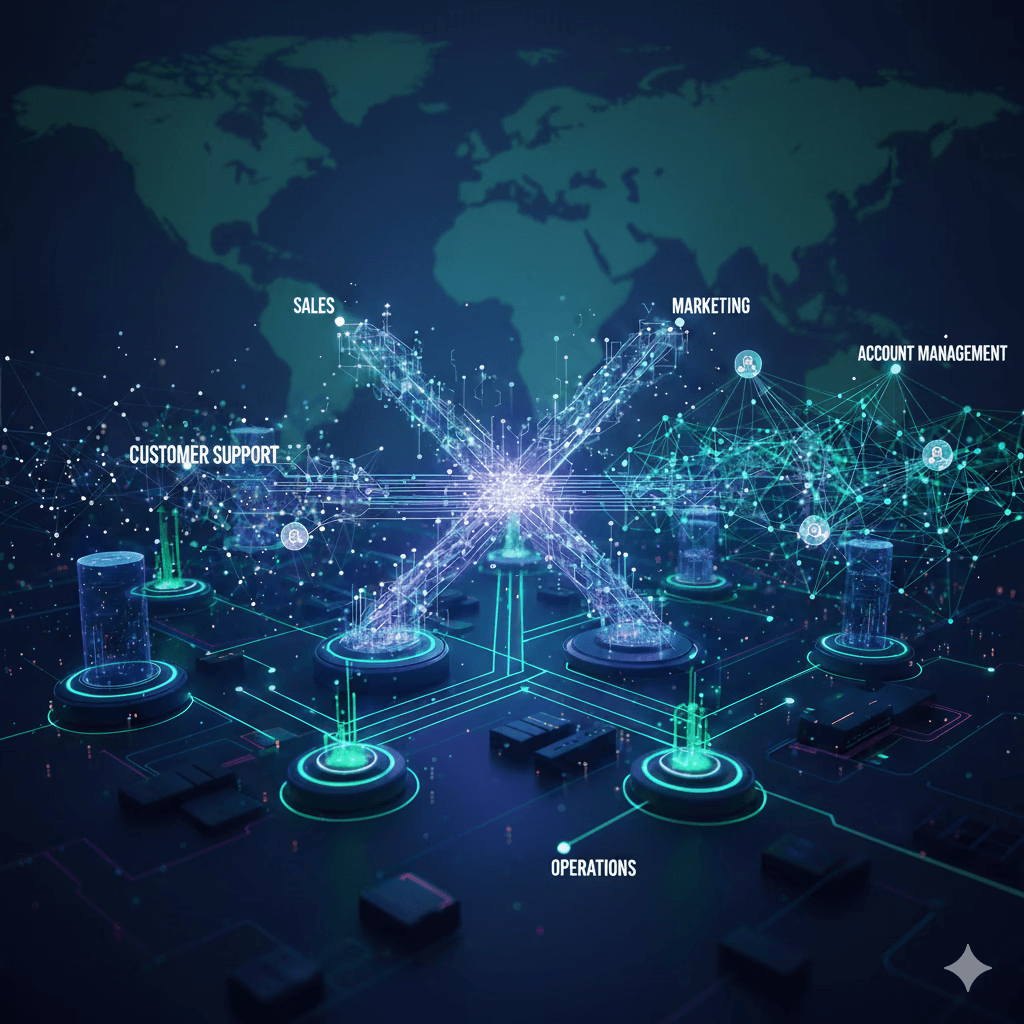
Enterprise automation has gone through four distinct waves over the past decade. Each wave promised transformation. Each delivered partial value. Each revealed a deeper bottleneck.
We are now entering the fifth phase, and for the first time, the constraint is not technology.
It is judgment.
Wave 1: RPA — Automating the Visible Surface
The first serious enterprise automation wave was Robotic Process Automation. RPA automated repetitive, rule-based tasks like copy-paste between systems, data entry, structured reconciliations, and form filling.
It delivered measurable FTE savings, faster cycle times, and tactical cost reduction. But RPA had structural limitations: it automated how work was done, not why it existed. It was brittle when processes changed. And it required well-defined workflows, which many enterprises didn't actually have documented.
RPA assumed process clarity. Most enterprises had process mythology.
Wave 2: Process Mining — Seeing the System
Process mining platforms ingested system logs and reconstructed end-to-end workflows, variants, bottlenecks, and throughput metrics. For the first time, enterprises could see how work actually flowed across systems.
But the view was often constrained to within-team or within-system workflows. And then came the inevitable executive question:
"Now that I can see the process… what should I change?"
Process mining optimized within the existing architecture of work. It rarely generated enterprise-wide transformation strategies.
Visibility improved. Strategic prioritization did not.
Wave 3: Task Mining — The Micro View of Work
Task mining zoomed in further, capturing user-level activity. It revealed hidden manual steps, shadow processes, workarounds, and fragmented tool usage. This added critical nuance around why exceptions occur, what the real variants are, and where cognitive load is concentrated.
Yet the "what next?" problem persisted. Enterprises could see system flows and human-level friction, but still struggled with cross-team workflow dependencies and translating discovery into CFO-ready business cases.
Discovery became richer. Decision-making remained manual and fragmented.
Wave 4: Early AI Automations — Smarter, but Still Tactical
Large language models expanded automation into cognitive territory: unstructured document processing, customer interaction handling, contract review, triage and routing, and decision support. Agentic systems pushed the frontier further, capable of executing multi-step reasoning across tools.
But AI could automate far more than organizations could responsibly prioritize. Model capability outpaced enterprise coordination.
Automating siloed workflows without understanding cross-team impact creates digital fragmentation at scale.
The Inflection Point: Agentic Discovery Across the Enterprise
We are now entering the next evolution: agentic discovery + outcome-centered transformation. This phase goes beyond mapping and automation.
- Analyzing cross-team workflows end-to-end
- Identifying enterprise-level value pools
- Quantifying impact across financial, operational, and risk dimensions
- Generating structured transformation strategies
- Producing executable blueprints tied to business metrics
"How does this workflow interact with upstream and downstream teams, and where is value being created or destroyed across the chain?"
Where Traditional Platforms Fall Short
- RPA: automated deterministic fragments
- Process Mining: revealed system flows
- Task Mining: exposed human friction
- Generic AI Builders: accelerate creation but don't prioritize
What remains missing is an intelligence layer that:
- Connects workflows across teams
- Anchors decisions in financial and risk metrics
- Generates structured transformation strategies
- Bridges discovery to execution
Discovery without enterprise synthesis creates analysis overload. Automation without cross-functional coordination creates localized gains and systemic inefficiencies.
From Discovery to Enterprise Blueprinting
Most platforms stop at visibility. Some extend into automation. But enterprise AI transformation requires something more fundamental: a shift from discovery to blueprinting.
At Worktrace, we believe the next evolution of enterprise AI is not about generating better dashboards. It is about generating enterprise-grade transformation logic.
- Cross-Team Workflow Intelligence. Transformation rarely lives inside a single department. Revenue leakage in sales often surfaces in finance. Compliance bottlenecks originate in operations. Customer service overload begins in product design. Enterprise AI cannot optimize silos. It must understand the system.
- Business-Metric Anchoring. Automation-first thinking has over-indexed on productivity. But hours saved is an incomplete metric. Every transformation candidate must be evaluated against revenue growth, structural cost improvement, risk reduction, quality, and experience. Business impact becomes the primary axis of prioritization.
- End-to-End Transformation Blueprints. Dashboards describe reality. Blueprints redesign it. The next generation of AI platforms must generate:
- Prioritized roadmaps tied to enterprise metrics
- Clear eliminate → simplify → standardize → automate pathways
- Identification of true agentic opportunities
- ROI scenarios anchored to measurable baselines
The next stage is strategic orchestration. Not just doing work faster, but redesigning the enterprise, deliberately, cross-functionally, and anchored in business value.

Stop scrolling. Start discovering.
Discover and define your workflows with Worktrace: zero setup, real results in a week.
We'll get in touch with you shortly.

Teams using Worktrace build and deploy agents 4x faster than starting from scratch.